|
Owner’s GuideAllergies - Inhalant (Atopy)
ArthritisArthritis is a painful, degenerative joint disease that involves the deterioration of joint cartilage. It affects at least one in five adult dogs in the United States. Arthritis is even more common among older dogs. The actual number of dogs suffering from arthritis is unknown, because owners often attribute the subtle changes in their dogs to ‘old age’ or ’slowing down.’ This condition is progressive and can affect one or more joints. Arthritis causes pain, stiffness, joint swelling, lameness and reduced mobility, all of which can result in a reduced quality of life. As the disease progresses, there can be additional destruction of cartilage on the bone surface and production of extra bone around the joint. If left undiagnosed and untreated, arthritis can cause irreversible damage and prevent dogs from fully participating in everyday activities such as walking, running and swimming. Canine VaccinationsThe decision to vaccinate your dog should not be taken lightly. Failure to vaccinate could result in your dog contracting a serious preventable disease. However, unnecessary vaccinations should be avoided. Here at Main Street Veterinary Hospital, we strive to formulate a vaccination schedule that best fits your pet’s individual needs. The vaccination schedule recommended for your pet will depend on the following factors
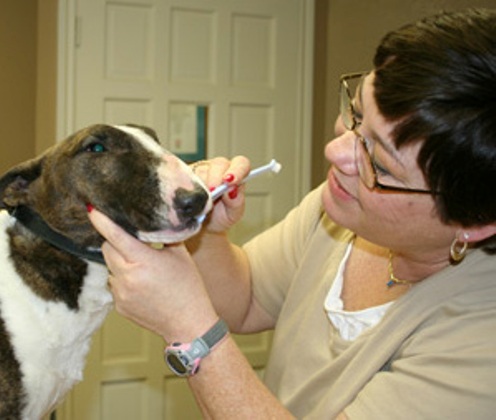
DentalPeriodontal disease is by far the number one most diagnosed problem in small animal patients today. By the age of 2, 70% of cats and 80% of dogs have some degree of periodontal disease. Though preventative dentistry is important in all dogs, smaller dogs tend to develop dental problems at an earlier age. Bad breath is often the first sign of dental disease an owner notices. Dental LetterWith the addition of the advanced dentistry department to our hospital, we have had many questions asked about the difference between dental care “then and now.” We would like to take this opportunity to share some of those questions and answers with you. Feline VaccinationsThe decision to vaccinate your cat should not be taken lightly. Failure to vaccinate could result in your cat contracting a serious preventable disease. However, unnecessary vaccinations should be avoided. Here at Main Street Veterinary Hospital, we strive to formulate a vaccination schedule that best fits your pet’s individual needs. The vaccination schedule recommended for your pet will depend on the following factors
Heartworms - Dogs
Heartworms - CatsDear Cat Owner, The doctors at Main Street Veterinary Hospital would like to make you aware of the serious threat of Feline Heartworm Disease to your cat. New research from the Auburn University College of Veterinary Medicine indicates that heartworm disease in cats is a far bigger issue that most of us thought. While we have been aware that cats could be infected with heartworms, the difficulty of testing prevented us from knowing how many cats were actually infected. With improved testing methods, we have been able to identify the number of cats infected and to learn more about the disease process. We now know that the cat’s body responds to the infection with intense inflammation of the lung tissue. We believe that many asthma-like or other similar respiratory ailments may actually be caused from a heartworm infection. This disease state is clinically recognized as Heartworm Associated Respiratory Disease, or H.A.R.D. The lung changes experienced by cats with heartworm infection can be subclinical and therefore difficult to detect, but the bottom line is cats with H.A.R.D can’t breathe or function normally. The good news is that although H.A.R.D and feline heartworm disease can be difficult to diagnose and complicated to treat, they are easily prevented with a once-monthly parasite preventive medicine, such as REVOLUTION™ (selamectin). We strongly recommend that all cats that live in this area be on heartworm prevention. Research and experience show that even indoor cats are at significant risk. Please read the enclosed fact sheet on H.A.R.D. For more information about heartworm prevention for your cat please call our team at Main Street Veterinary Hospital at 972-355-0008. Don’t let your cat go another day unprotected. Sincerely, Dr. Denise Smith, Hospital Director P.S. Help us spread the word and make a difference! Please share this information with your friends and family who have cats. Links KittensSeveral diseases that cats get are almost always fatal- feline leukemia, feline infectious peritonitis, and rabies for instance. Other diseases can kill kittens or cause chronic re-occurring clinical signs in adult cats. Fortunately for your pet, vaccinations are available to prevent many cat diseases. Vaccines protect pets against common viruses and bacteria that cause disease. Because many kittens may not develop immunity against diseases for several weeks and may actually be incubating a disease themselves, new kittens should not be exposed to other cats until their vaccination schedule is complete. Below is a summary of the vaccination schedule we recommend. Puppies
SeniorsThese are two of the most common questions asked daily here at Main Street Veterinary Hospital. While predicting how long a pet can live is typically impossible. We can give you an idea of how old your pet is in terms of human years and in the next few pages give you sound advice on how to help your pet live a longer more healthy life. The decisions that you make during the later years of your pets life can directly affect not only the length of your pet’s life but also the quality. Start below by using the chart to find out how old your pet really is and use the checklist below to help you determine if your pet is healthy. Weight IssuesWalking can be difficult and painful for an arthritic pet. There are many new medications available to treat arthritis pain. Pets with arthritis do better with straight line exercise (i.e. walking, swimming, fetching). Dogs should never be walked when it is hot outside. This is especially true when the humidity is high. The only way a pet can cool itself is by panting. The moisture in the lungs evaporates thereby cooling the blood flowing thru the lungs. If the humidity is high, this process cannot occur. Pets can easily overheat especially during the hot Texas summers. Many dogs die of heat stroke every year. |